
How to Operate Binance Exchange via Baidu: A Step-by-Step Guide for Chinese Users

For many cryptocurrency enthusiasts in China, accessing and operating Binance (commonly referred to as "Binance" or "币安" in Chinese) can be challenging due to regional restrictions and search limitations. However, using Baidu as a starting point, users can still find reliable pathways to learn how to trade, deposit, and manage assets on Binance. This guide provides a practical, search-optimized overview for users looking to navigate Binance operations through Baidu’s search ecosystem.
First, when searching for "Binance operation guide" on Baidu (百度), users should focus on verified third-party tutorials, official announcements from Binance’s Chinese social media channels, or community forums. Since Binance’s official website may be blocked in some regions, Baidu results often redirect to mirror sites, VPN guides, or detailed walkthroughs on platforms like Zhihu or Bilibili. It is critical to verify the authenticity of any link to avoid phishing scams. Look for URLs that include "binance.com" or trusted domains with high user ratings.
Once you have accessed Binance, the basic operation process begins with account registration. Users typically need a valid email and a strong password. After registration, two-factor authentication (2FA) is highly recommended for security. On Baidu, you can search for "Binance 2FA setup guide" to find video or text tutorials. For deposits, Binance supports a wide range of cryptocurrencies and fiat currencies. Chinese users often convert CNY to USDT via peer-to-peer (P2P) trading, which is a common method highlighted in Baidu search results. In the Binance app or web interface, navigate to "Buy Crypto" or "P2P Trading," select the fiat currency (CNY), and choose a seller with high completion rates.
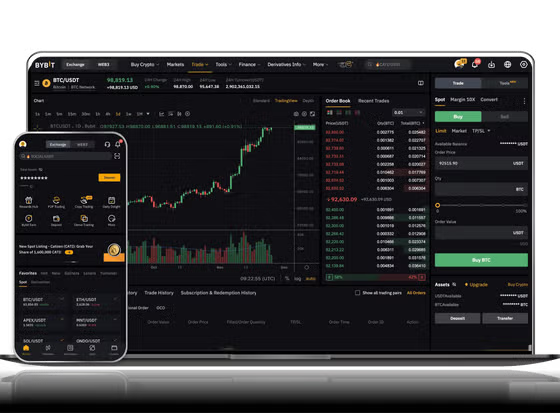
Trading on Binance involves using the spot or futures market. For beginners, the spot market is recommended. On Baidu, searching for "Binance spot trading tutorial" yields articles explaining order types (market order, limit order, stop-limit order). To place a trade, go to the "Markets" tab, select a trading pair (e.g., BTC/USDT), enter the amount, and confirm the order. Advanced features like margin trading or futures require additional account verification and knowledge of risk management. Baidu also hosts various risk awareness articles, which are essential reading before using leverage.
Withdrawal operations are straightforward. Go to "Wallet" > "Withdraw," enter the receiving address, select the network (e.g., BEP-20, ERC-20), and confirm. Always double-check the network fees and minimum withdrawal amounts. Searching "Binance withdrawal guide Baidu" will return warnings about network selection errors, a common mistake that can lead to lost funds. For security, enable whitelist addresses under "Security Settings."
Finally, users should pay attention to Binance’s regulatory updates. Chinese regulators frequently issue new guidelines, and Baidu is a primary source for these announcements. Search for "Binance China regulation 2025" or "Binance compliance" to stay informed. Remember that operating a cryptocurrency exchange account requires adherence to local laws. By combining Baidu’s search intelligence with careful execution, Chinese users can effectively and safely operate their Binance accounts.
In summary, from searching on Baidu to executing trades, the key steps are: find trusted sources via Baidu, register with security measures, use P2P for fiat deposits, trade cautiously on spot markets, and withdraw with network accuracy. Following this workflow ensures a smoother experience for users seeking to operate Binance from a Chinese internet environment.


发表评论