
Binance vs Volcano Exchange: A Step-by-Step Guide to Getting Started with Crypto Trading
In the rapidly evolving world of cryptocurrency trading, choosing the right platform is crucial for both beginners and experienced investors. Binance, often referred to as the world’s largest crypto exchange by trading volume, has long been the go-to choice for traders seeking liquidity, a wide range of altcoins, and advanced trading features. However, due to regional restrictions, regulatory changes, or personal preference, many users are now exploring alternatives like Volcano Exchange. This article provides a clear, actionable guide on how to use Volcano Exchange while drawing comparisons to the Binance experience, helping you navigate both platforms effectively.
First, it’s important to understand what Volcano Exchange offers. Volcano Exchange is a relatively newer platform that has gained attention for its user-friendly interface, low trading fees, and support for various cryptocurrencies. While it may not yet have the same breadth of assets as Binance, it compensates with streamlined registration processes and localized support. To get started on Volcano Exchange, users need to visit the official website and create an account. The registration typically requires an email address and a strong password. Similar to Binance, Volcano Exchange then asks for identity verification (KYC) to comply with anti-money laundering regulations. This usually involves uploading a government-issued ID and a selfie. Once verified, you can deposit funds either via cryptocurrency transfer or, depending on your region, through fiat on-ramp options like bank transfers or credit cards.
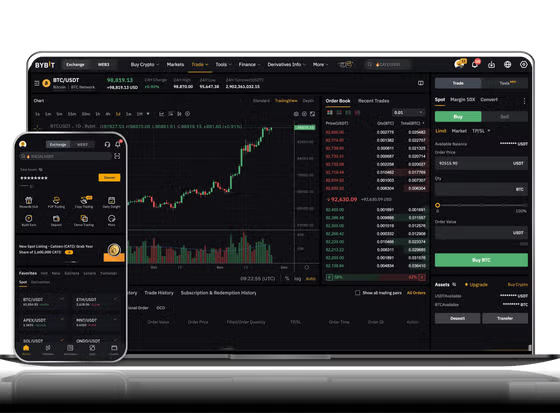
When it comes to trading, Volcano Exchange operates much like Binance but with a simpler layout. After logging in, navigate to the “Spot Trading” section. There you will see a trading pair, such as BTC/USDT. The interface displays a real-time order book, price chart, and your current balance. To place a trade, select the amount of crypto you want to buy or sell. You have two primary order types: Market Order (executes immediately at the current price) and Limit Order (executes only when the price reaches your specified level). For beginners, a market order is the simplest way to start. For comparison, Binance offers additional advanced order types like stop-limit and OCO (One Cancels the Other), which are useful for experienced traders managing risk. Volcano Exchange keeps things straightforward but is gradually adding more sophisticated tools.
Security is a key concern for any trader. Binance has long invested in multi-layered security systems including SAFU (Secure Asset Fund for Users) and mandatory 2FA (two-factor authentication). Volcano Exchange also encourages 2FA via Google Authenticator and offers withdrawal whitelist features. When using either platform, never share your private keys or API secrets. For long-term holdings, consider moving your assets off the exchange to a hardware wallet. Binance and Volcano Exchange both support withdrawals to external wallets, but be mindful of network fees. Volcano Exchange often has lower withdrawal fees for popular coins like Bitcoin and Ethereum compared to Binance, which can save you money if you move funds frequently.
For users coming from Binance who are trying Volcano Exchange for the first time, the transition can be smooth if you focus on the core similarities. Both platforms provide mobile apps, real-time market data, and basic charting tools. However, if you rely heavily on Binance’s extensive features such as futures trading with high leverage, margin lending, or Binance Launchpad, you may find Volcano Exchange limited. Volcano Exchange currently focuses more on spot trading and simpler DeFi integrations. To get the most out of Volcano Exchange, start by trading small amounts, test the withdrawal process, and explore their “Earn” section if available, which may offer staking or savings products similar to Binance’s flexible savings.
Another critical difference is customer support. Binance has a large support ecosystem including live chat, email, and a comprehensive FAQ page, but response times can be slow during high-traffic periods. Volcano Exchange, being smaller, often provides faster, more personalized support via email or Telegram groups. If you encounter issues like a stuck withdrawal or verification failure, Volcano Exchange’s smaller user base can actually work in your favor. However, always verify the official support channels to avoid phishing scams. Never trust unsolicited messages claiming to be from exchange staff.
Finally, consider liquidity. Binance’s enormous trading volume means you can execute large orders with minimal price slippage. Volcano Exchange, while adequate for retail traders, may have thinner order books for less popular coins. This can lead to slightly worse execution prices for larger trades. If you are trading high volumes (over $10,000 per trade), Binance remains the superior choice. For casual trading and lower fees, Volcano Exchange is a viable alternative, especially if you are in a region where Binance is restricted. Always do your own research, check the latest regulatory status of both platforms in your country, and never invest more than you can afford to lose. By understanding the strengths of each exchange, you can build a flexible and secure crypto trading strategy.


发表评论